Authentic Texture: Using Vintage Stained Paper Backgrounds
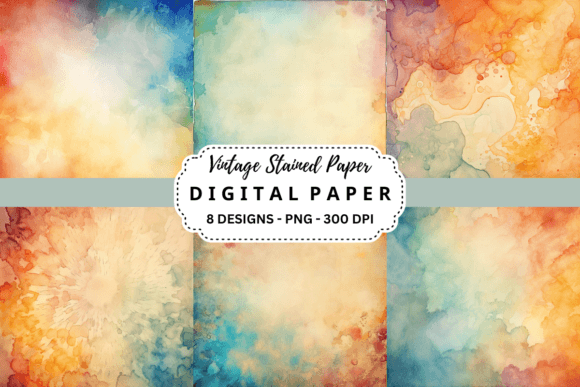
In a digital landscape often dominated by pristine, vector-perfect graphics, there is a growing hunger for authenticity. We see it in the resurgence of film photography, the popularity of craft goods, and the way brands are striving to look more human. This is exactly where Vintage Stained Paper Backgrounds come into play. These aren't just random textures; they are curated assets designed to inject history, warmth, and tactile realism into your projects. When you are working with a high-quality set—specifically the 8 Individual PNG files offering 300 DPI resolution and 3600 x 3600 pixels—you are equipping yourself with the raw materials for serious professional work.
The Visual Character: More Than Just a Filter
It is easy to mistake a vintage texture for a simple sepia overlay, but true Vintage Stained Paper Backgrounds possess a distinct visual personality that a filter cannot replicate. These assets are characterized by organic imperfections: the subtle yellowing of age, coffee ring stains, foxing (those small brown spots caused by chemical decay), and the fibrous structure of old parchment. The appeal lies in the "lived-in" look. It suggests a narrative before you even add your text or imagery.
When evaluating these backgrounds, pay attention to the tonal range. A premium asset shouldn't just be a flat color; it should have gradients of light and shadow that mimic how light hits a crumpled or folded sheet. Because these specific files are delivered at 3600 x 3600 pixels, they offer immense flexibility. You aren't stretching a small web graphic to fit a poster; you are working with a canvas that retains its grain and detail even when printed at large formats. This high fidelity is crucial for maintaining the illusion of reality in your brand identity and design assets.
Strategic Applications: Where Texture Meets Function
Knowing where to deploy these backgrounds is just as important as having them. While they are undeniably beautiful, their utility spans a wide range of professional and personal projects. As a designer or entrepreneur, you need to match the texture to the medium to ensure your message lands effectively.
Digital Presence and Social Media
On platforms like Instagram, Pinterest, and Facebook, the algorithm rewards engagement, and users reward authenticity. Social media graphics often suffer from looking too "corporate" or sterile. By using a Vintage Stained Paper Background, you can soften the digital harshness. This works exceptionally well for quote graphics, sale announcements for boutique brands, or lifestyle content. The texture acts as a unifying element, making disparate posts look cohesive within a grid. It is a subtle way to build brand identity without relying solely on your logo.
Print and Packaging
In the realm of packaging design and print on demand, tactile perception is everything. If you are designing labels for artisanal goods, coffee packaging, or handmade soaps, these backgrounds are indispensable. They communicate "handcrafted" and "small-batch" instantly. For print invitations and scrapbooking, the high 300 DPI resolution ensures that the grain looks sharp on cardstock. You can also use these for wrapping paper designs, creating a rustic, unboxing experience that feels premium and thoughtful.
Editorial and Web Design
In editorial design, such as magazine layouts or blog headers, these textures can serve as a grounding element for typography. They provide a rich, complex canvas that makes simple text pop. In web design, they can be used for hero sections or footer backgrounds to add depth, provided they are optimized correctly for load times. The goal is to use the texture to guide the eye, creating a visual hierarchy that feels natural rather than forced.
The Typography Equation: Pairing Fonts with Texture
A background is only half the equation; the text overlay determines readability and style. When working with a distressed or stained surface, your choice of typeface is critical. The visual noise of the paper means you need to be selective to avoid a chaotic mess.
Avoid highly detailed script fonts or ultra-thin sans serif fonts if the texture is busy. These can get lost in the stains and grain. Instead, consider a bold serif font or a heavy slab serif. The thick strokes of these typefaces create a strong contrast against the organic, irregular lines of the paper. For a more modern twist, a geometric sans serif font with wide tracking (letter spacing) can look stunning. The clean, mathematical lines of modern typography juxtaposed against the chaotic decay of the paper creates a dynamic tension that is very popular in contemporary design.
Always test your font pairing on the actual background before committing. Zoom in to 100% to ensure the legibility holds up. Sometimes, adding a very subtle drop shadow or a semi-transparent shape behind the text is necessary to ensure the message is readable while preserving the beauty of the Vintage Stained Paper Background.
Practical Workflow and Licensing Considerations
For the creative professional or small business owner, workflow efficiency and legal safety are paramount. When incorporating these assets into your toolkit, keep the following practical points in mind:
- File Management: With 8 distinct variations, organize your files by mood or color temperature (e.g., "Dark_Aged" vs "Light_Parchment"). This saves time when you are in the middle of a design sprint.
- Color Grading: Even though these are "vintage," they are versatile. Use Photoshop or Illustrator adjustment layers to tint them. Need a moody blue for a tech brand? Overlay a deep navy. Need a romantic pink for a wedding invite? Tint the texture with a soft rose. This allows you to maintain your specific brand identity while using the same texture asset.
- Commercial Licensing: If you are selling products—whether it's a poster design, a t-shirt, or a digital template—you must ensure you have the rights to use the assets commercially. Most premium asset packs allow for this, but always verify the terms. This protects your business and ensures you can monetize your creativity without legal hurdles.
Ultimately, Vintage Stained Paper Backgrounds are more than just a design trend; they are a tool for storytelling. They bridge the gap between the cold perfection of digital screens and the warm, imperfect reality of the physical world. By integrating these high-resolution textures into your logo design, web design, or social media graphics